AirAssist is now available in the United States
AirAssist is now available in the United States
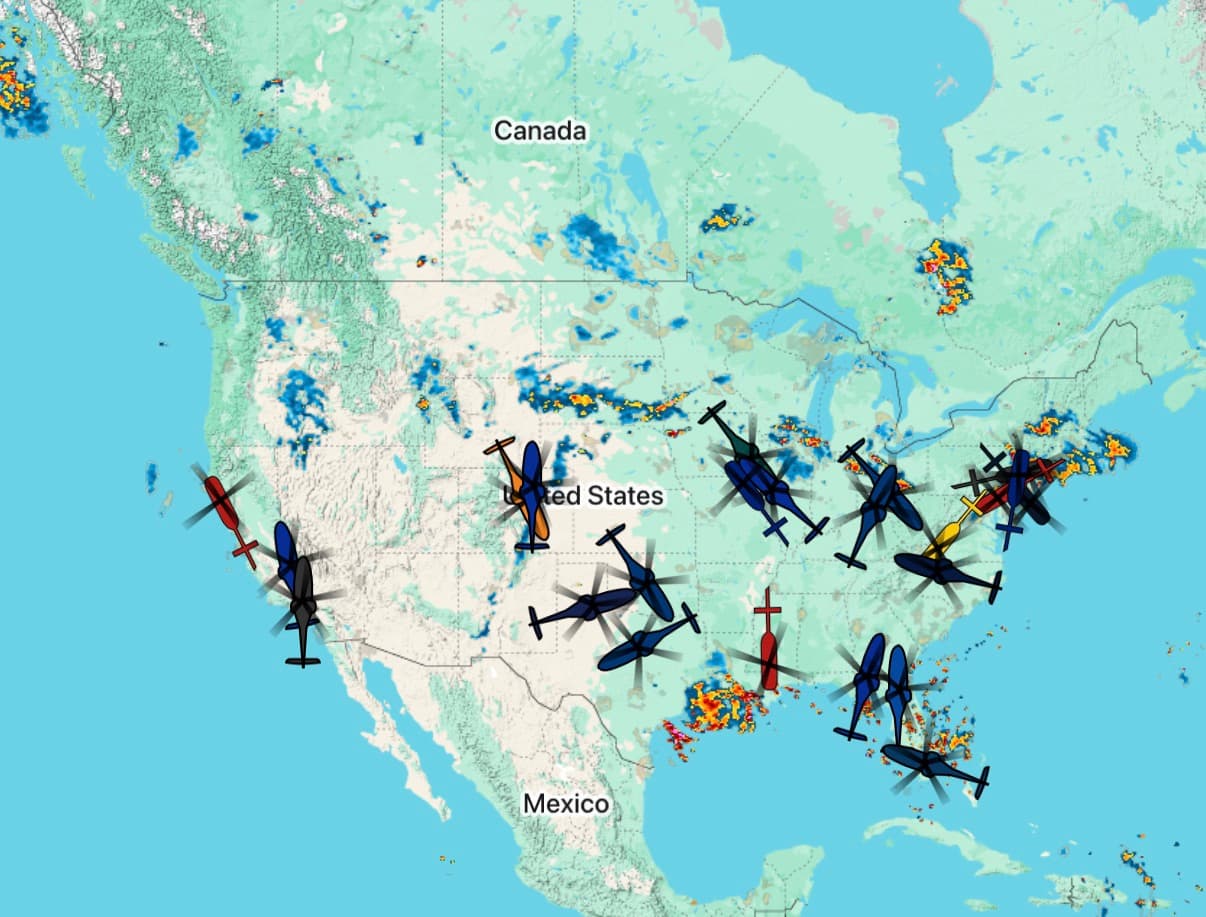
September 1st 2026AirAssist has tracked European air ambulances, police helicopters and rescue aircraft for years. From today it does the same across the United States. This release adds more than 2,000 aircraft and over 170 new icons, covering air medical programs from Washington State to Florida, from Southern California to New England.
Why the United States took a while
The US has the largest air medical fleet in the world, with thousands of rotor and fixed wing aircraft in service, operated by a mix of national providers, regional operators and hospital-based programs. Almost none of them are listed anywhere in a form a tracking app can use. A registration by itself tells you that a Bell 407 exists. It does not tell you that it is the aircraft your local trauma center launches at three in the morning.
That is the gap this release closes. Every aircraft added here was matched by hand to the program that flies it, so that when a helicopter passes overhead the app can tell you which service it belongs to rather than showing an anonymous Mode-S code.
The national air medical providers
The backbone of US air medical transport is a handful of large operators, and all of them are now in the app. Air Methods appears across dozens of its regional brands, including LifeNet, Native Air, SkyLife, Mercy Air, AirLife and Guardian Flight, flying AS350 and H125 airframes alongside EC130 and EC135 machines. Air Evac Lifeteam adds a large fleet of Bell 206 and EC135 aircraft across the Midwest, the South and Appalachia. Med-Trans contributes AS350, AW119 and EC135 aircraft under a range of hospital partnerships, including the grey EC135 scheme that several of its programs fly.
On the West Coast, REACH Air Medical Services is now covered in depth, with its AW109, Bell 407, EC135, H125 and H130 fleet and its Washington operation flying the EC145. PHI Air Medical adds its AS350 fleet, and CALSTAR appears with the EC135. Airlift Northwest, Air Care, AeroCare, AeroMed, MedEvac, STAT MedEvac, HealthNet, Metro Aviation programs and Global Medical Response brands round out the national picture.
Hospital programs, by name
What makes the US different from most of Europe is how many hospitals run their own flight program under their own name. Those names matter to the people who see the aircraft, so they are the names the app uses.
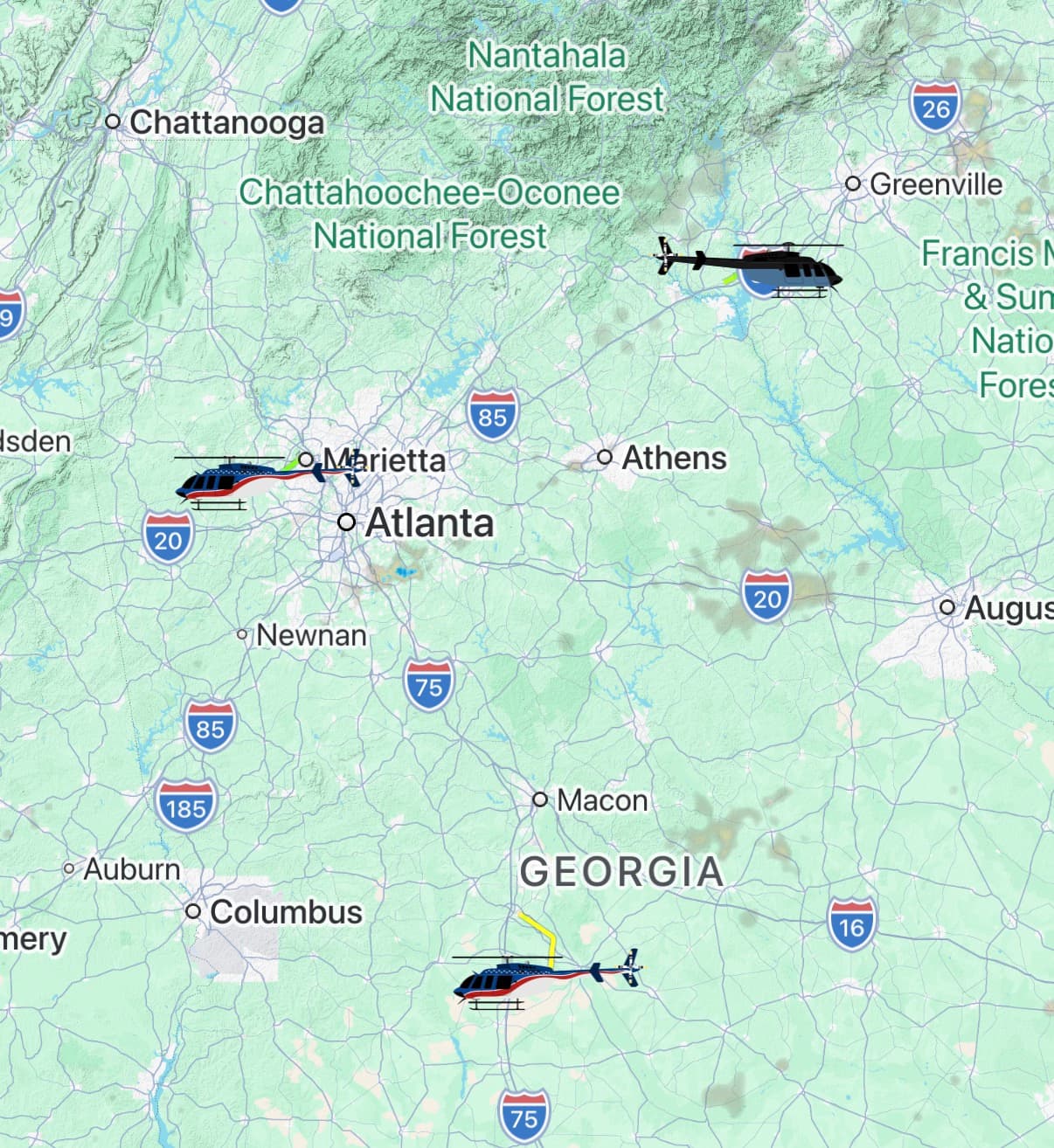
In the Northeast that means Yale New Haven, Johns Hopkins, Temple, RWJBarnabas, JeffSTAT, Lehigh Valley MedEvac, WellSpan, University Hospitals Air Medical and LifeStar. The Mid-Atlantic and Southeast bring Carilion Clinic, VCU Health, Centra, Riverside, Bon Secours, Mid-Atlantic MedEvac, Wings, Prisma Health, GHS, AnMed Health, McLeod Health, MUSC Health, Regional One, LifeForce, Vanderbilt LifeFlight, TriStar, Emory, Carolina Life Flight and Georgia programs including the Children's Healthcare Panda One aircraft.
Florida is well represented with ShandsCair, TraumaOne, Health TraumaOne, Bayflite, Tampa General Aeromed, Lee Flight and AdventHealth. The Midwest adds Akron Children's, Cleveland Clinic, Cincinnati Air Care, University of Wisconsin UW Health, Aspirus, ThedaStar, UnityPoint, Carle, Ascension, SSM Health Cardinal Glennon, St. Vincent, St. Joseph, Mercy, Lutheran, MedForce, LifeLink, MemorialStar and Just For Kids. Texas and the Southwest contribute MedStar, StarFlight, UT LifeStar, Covenant, Methodist, Spirit, Shannon, CareFlight, Banner Health, Arizona Lifeline and Native Air. The Mountain West and Northwest add Idaho Air Saint Luke's, Intermountain, Airlift, HealthSTAR, Life Flight, FlightLife, Eagle, Air George and LifeAir. California adds Mercy Air, SkyLife, CALSTAR, REACH and the Mattel Children's EC135.
Alongside the medical fleet, this release also adds law enforcement aviation, with LAPD and NYPD helicopters now carrying their own icons in the app.
170 new icons, and why they exist
Adding an aircraft to a database is the easy half. The harder half is making a moving map readable at a glance. AirAssist draws every aircraft in its own livery, so you recognise a service the same way you would recognise it on a helipad: by its colours.
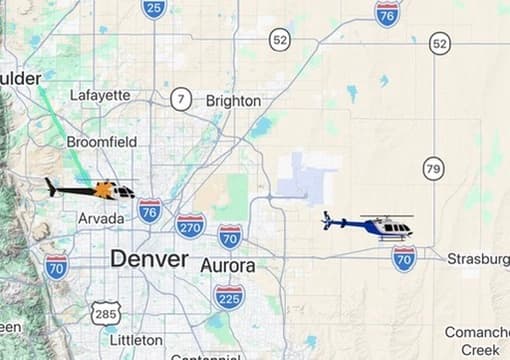
This release adds more than 170 hand-drawn icons for US operators. A Bell 407 in a stars and stripes scheme, a black and blue EC135, an orange and white AS350: each one is drawn to match the real aircraft. When two helicopters converge on the same scene, you can tell which program each one belongs to without tapping anything.
The airframes behind the names
US air medical aviation runs on a fairly small set of airframes, which is why the same helicopter type shows up under so many different names. The Bell 407 is everywhere, from AeroCare and AeroMed to LifeStar, MedStar, Wings and ShandsCair. The Airbus EC135, sold today as the H135, is the other workhorse and now appears in dozens of liveries. The EC145 and its H145 successor carry the heavier programs such as StarFlight, TriStar, VCU Health and REACH Washington. The AS350 and its H125 successor cover the single-engine light fleet, joined by the EC130 and H130, the AW109 and the AW119.
All of these types were already supported in AirAssist. What is new is that a Bell 407 over Tennessee is no longer just a Bell 407. It is LifeForce, and the app says so.
What you can do with it
You can see which air ambulances are airborne near you in real time, set notifications for a specific aircraft taking off or landing, and look back at where a helicopter has flown. AirAssist Pro adds the live traffic layer and live weather radar on the same map.
Coverage depends on ADS-B reception, which is excellent across most of the continental United States and thinner over remote terrain. AirAssist shows all of it, including aircraft that are missing from other tracking apps.
Missing your aircraft?
More than 2,000 aircraft is a start, not a finish. US air medical, law enforcement and search and rescue fleets change constantly as programs re-register airframes and change liveries. If your program is missing, or an aircraft is showing the wrong name or the wrong colours, get in touch. Reports from crews and from people who watch these aircraft every day are how this list gets built.
Get AirAssist
AirAssist is free to start on iPhone and Android. Install it, allow location access, and the aircraft flying near you appear on the map straight away.